In today’s fast-paced business environment, strategic planning can’t wait. Whether you’re a startup founder, a project manager, or a business consultant, you need tools that deliver results quickly without compromising quality. This guide will show you exactly how to create professional SWOT analyses and transform them into stunning, shareable infographics using cutting-edge online tools.
Why Traditional SWOT Analysis Takes Too Long
Traditional SWOT analysis methods often involve hours of brainstorming sessions, manual data collection, and tedious formatting in presentation software. The result? Outdated insights by the time you finish. Modern businesses need an AI SWOT generator that can accelerate this process while maintaining strategic depth.
The solution lies in leveraging an online SWOT maker that combines artificial intelligence with intuitive design capabilities. These tools don’t just create charts—they generate actionable insights and beautiful visuals simultaneously.
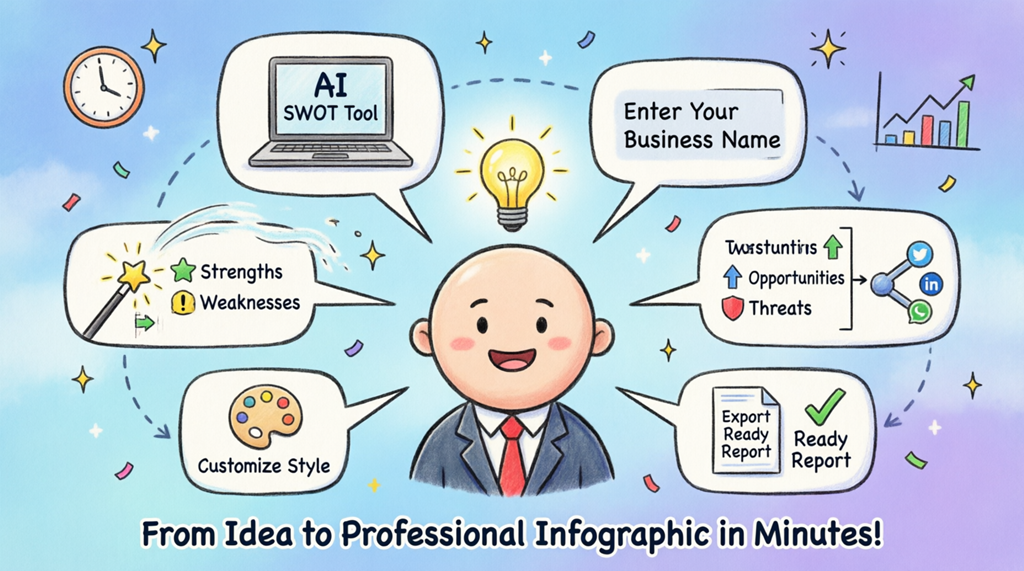
Step 1: Choose the Right AI-Powered SWOT Tool
Not all strategic planning software is created equal. When selecting an AI-powered strategic analysis tool, look for these essential features:
- Instant generation capabilities
- Multiple export formats
- Professional infographic templates
- Collaborative features
- Data privacy controls
Visual Paradigm’s ecosystem offers several options depending on your needs. For rapid infographic creation, the Four Aspects Infographic Designer is perfect. If you need deeper strategic analysis, try the SWOT and TOWS Business Analysis Tool. For conversational assistance, the AI Chatbot acts as your personal business strategy consultant.
Step 2: Input Your Business Context
The beauty of an AI-powered SWOT and TOWS analysis tool is its ability to understand context. Simply provide:
- Company or project name
- Industry sector
- Key objectives
- Current challenges (optional)
For example, if you’re analyzing Tesla Inc. in 2024, the AI will automatically consider factors like electric vehicle market trends, battery technology advancements, and competitive landscape dynamics.
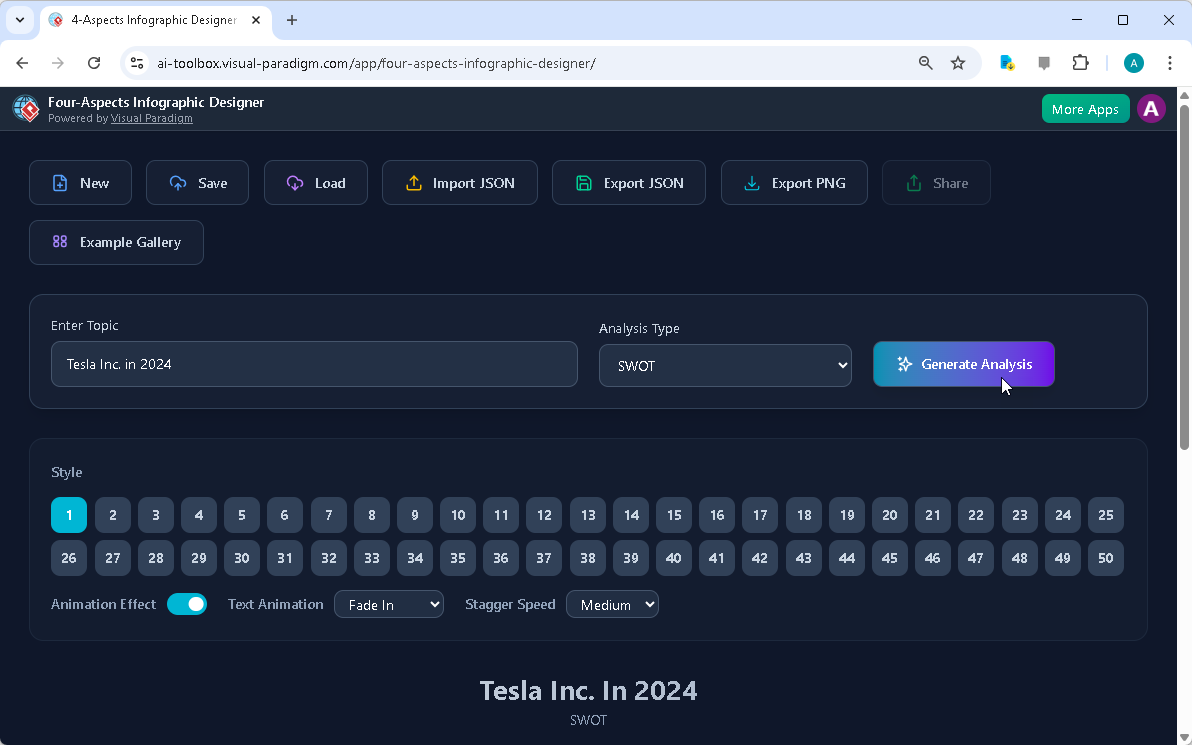
Step 3: Let AI Generate Your Initial Analysis
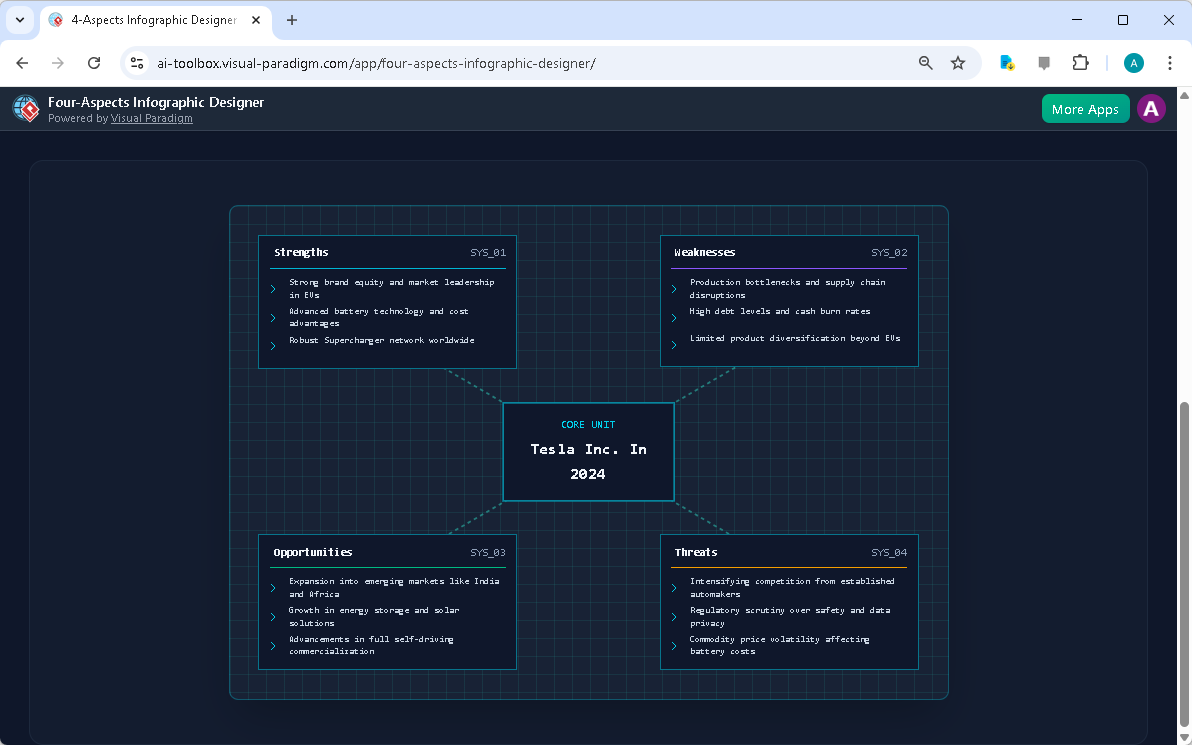
Once you’ve provided the basics, the professional SWOT analysis app gets to work. Within seconds, you’ll receive:
- Strengths: Internal capabilities that give you an advantage
- Weaknesses: Areas needing improvement
- Opportunities: External factors you can leverage
- Threats: External challenges to address
The best business analysis software doesn’t just list these factors—it provides evidence, impact assessments, and strategic implications for each point.
Step 4: Customize and Refine
AI provides the foundation, but your expertise adds the finishing touches. Use the easy-to-use business modeling tool interface to:
-
- Edit or remove suggestions that don’t fit
- Add specific insights unique to your situation
- Include quantitative data where available
This collaborative approach ensures the final output reflects both data-driven insights and human strategic thinking.
Step 5: Choose Your Infographic Style
Here’s where the magic happens. A professional strategic planning editor should offer multiple visualization options. Visual Paradigm’s infographic designer provides 50+ distinct styles, ensuring your presentation matches your brand and audience expectations.
Consider these factors when selecting a style:
- Executive presentations: Clean, minimalist designs with clear hierarchies
- Team workshops: Interactive, colorful layouts that encourage discussion
- Investor pitches: Data-rich visuals with professional polish
- Marketing materials: Bold, engaging designs that tell a story
Step 6: Enhance with TOWS Matrix Analysis
While SWOT identifies factors, the TOWS matrix transforms them into actionable strategies. The AI-powered SWOT and TOWS analysis feature helps you develop:
- SO Strategies: How to use strengths to maximize opportunities
- WO Strategies: How to overcome weaknesses by taking advantage of opportunities
- ST Strategies: How to use strengths to minimize threats
- WT Strategies: Defensive strategies to prevent weaknesses from making you vulnerable to threats
This progression from analysis to strategy is what separates a basic online diagram maker from a comprehensive strategic planning platform.
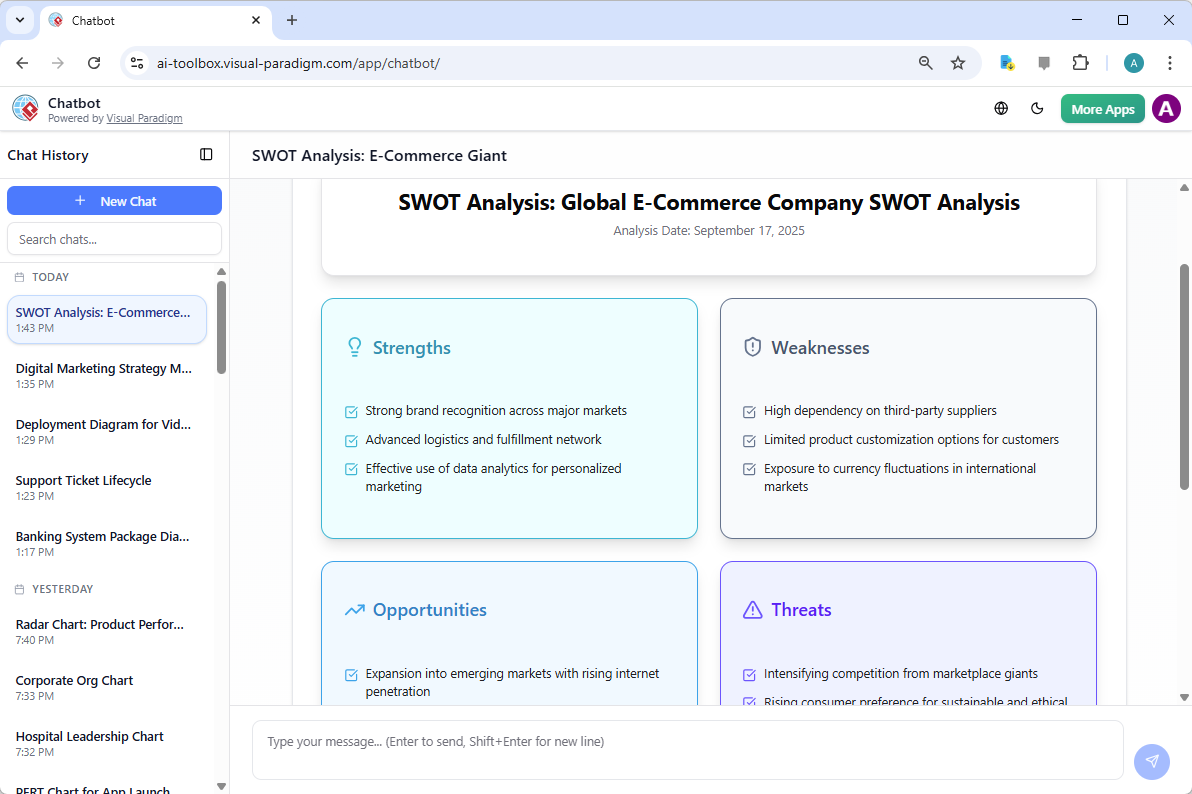
Step 7: Generate and Share Your Professional Report
The final step in using any professional SWOT analysis app is distribution. Modern tools should automatically compile your work into:
- High-resolution images for presentations
- PDF reports for stakeholders
- Interactive web links for collaboration
- Editable files for future updates
This ensures your strategic insights reach the right people in the right format.
Advanced Workflow: The Six-Step Strategic Analysis Process
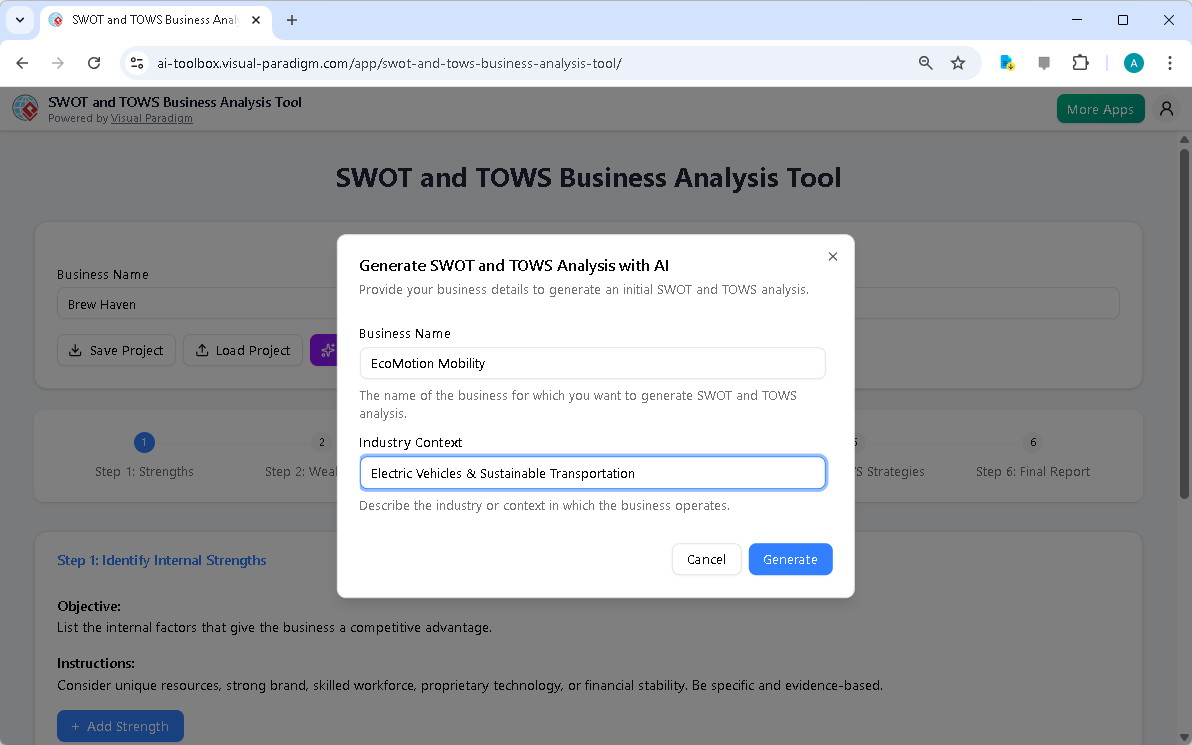
For organizations requiring deeper analysis, the comprehensive SWOT-TOWS business analysis tool offers a structured six-step wizard. Let’s walk through an example using “EcoMotion Mobility,” a fictional electric vehicle company.
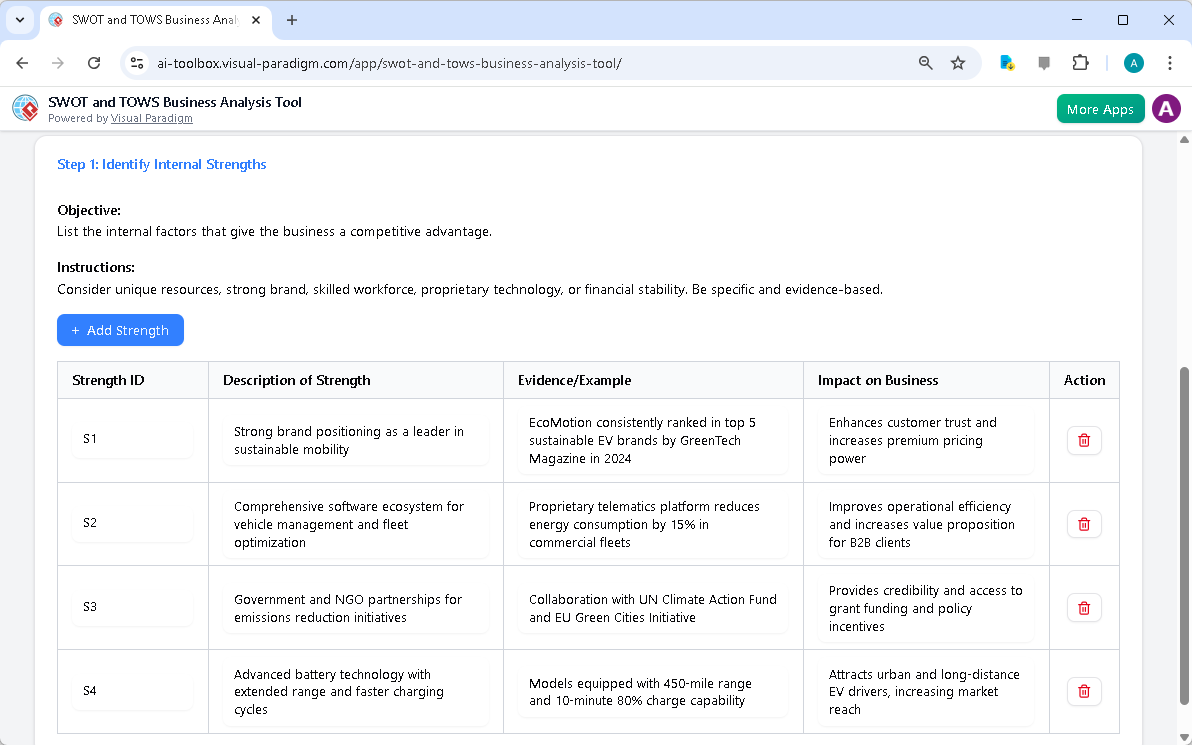
Step 1: Define Internal Strengths
The AI prompts you to identify core competencies with supporting evidence. For EcoMotion, this might include:
- Strong brand positioning in sustainable transportation
- Advanced battery technology with 500-mile range
- Proprietary charging infrastructure network
- Strategic partnerships with renewable energy providers
Each strength is documented in a dynamic table that’s as easy to edit as a spreadsheet, making collaboration seamless.
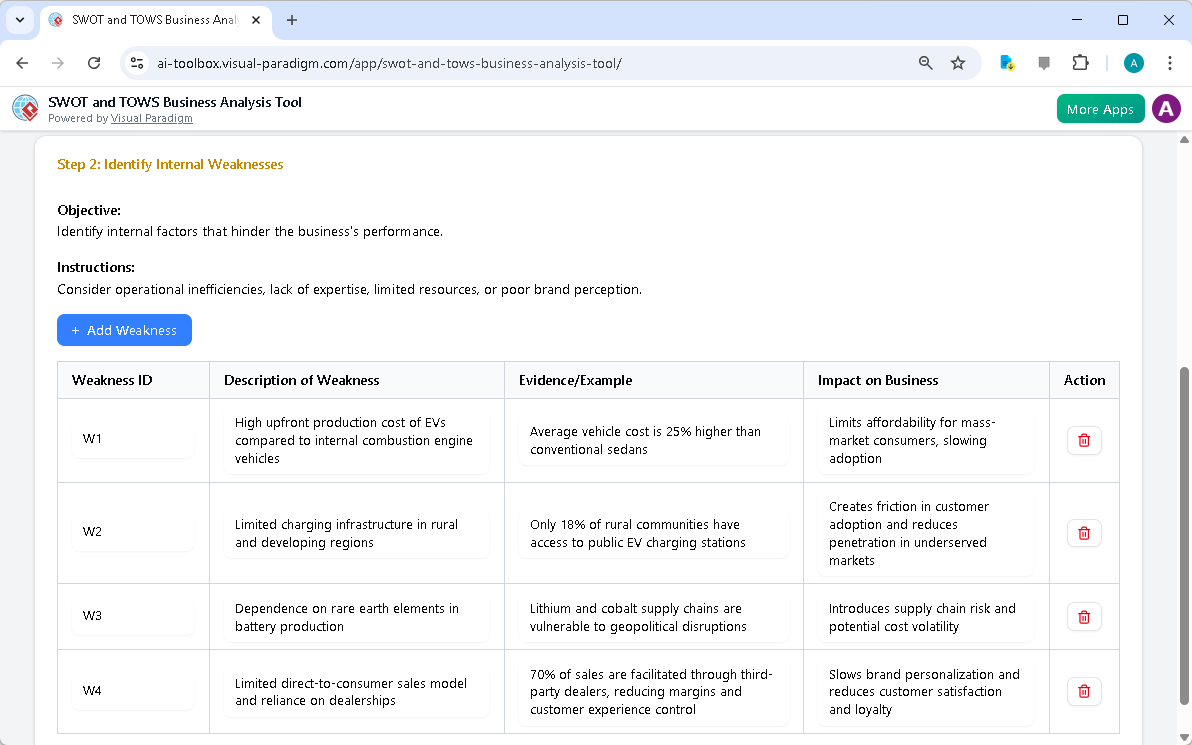
Step 2: Identify Internal Weaknesses
Honest self-assessment is crucial. The easy-to-use business modeling tool guides you to consider:
- High upfront production costs limiting market penetration
- Limited charging infrastructure in rural areas
- Dependency on rare earth minerals for batteries
- Smaller service network compared to traditional automakers
Documenting these vulnerabilities allows you to develop mitigation strategies proactively.
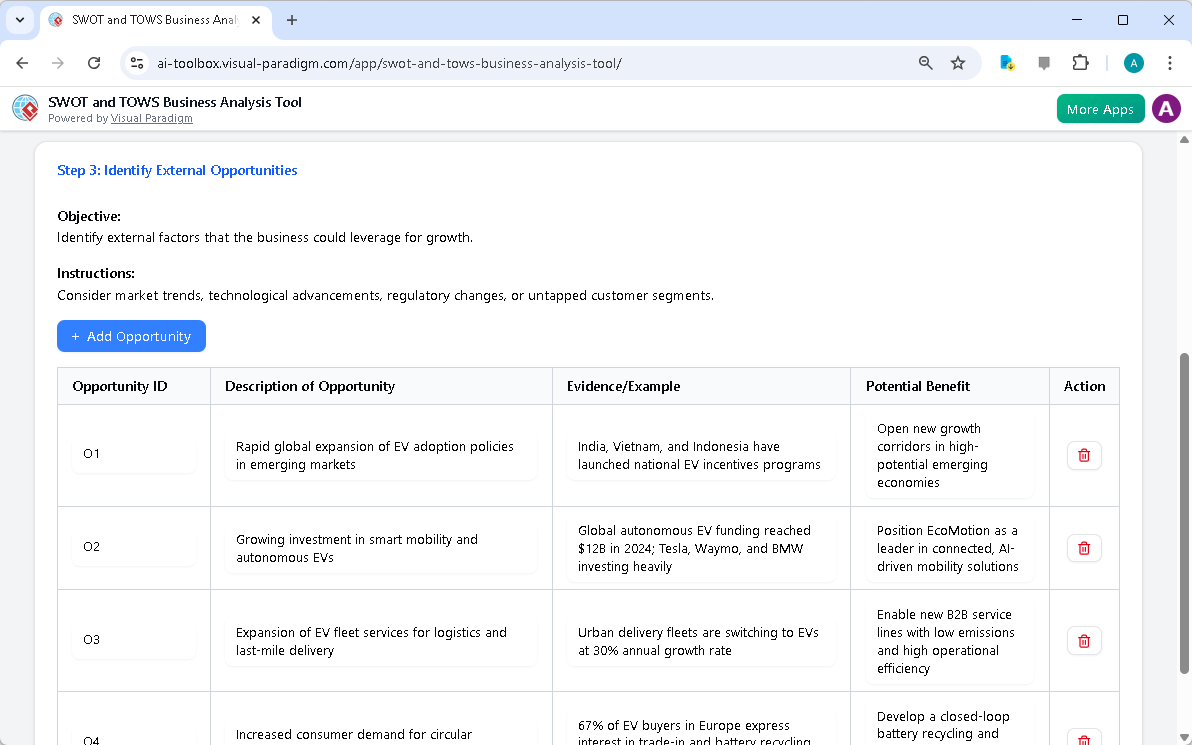
Step 3: Explore External Opportunities
This is where the AI-powered strategic analysis tool truly shines. Drawing from vast knowledge bases, it suggests growth corridors like:
- Rapid global expansion of EV adoption policies and incentives
- Growing investment in smart mobility and autonomous driving
- Increasing consumer preference for sustainable products
- Emerging markets with developing charging infrastructure
These external factors represent fertile ground for strategic expansion.
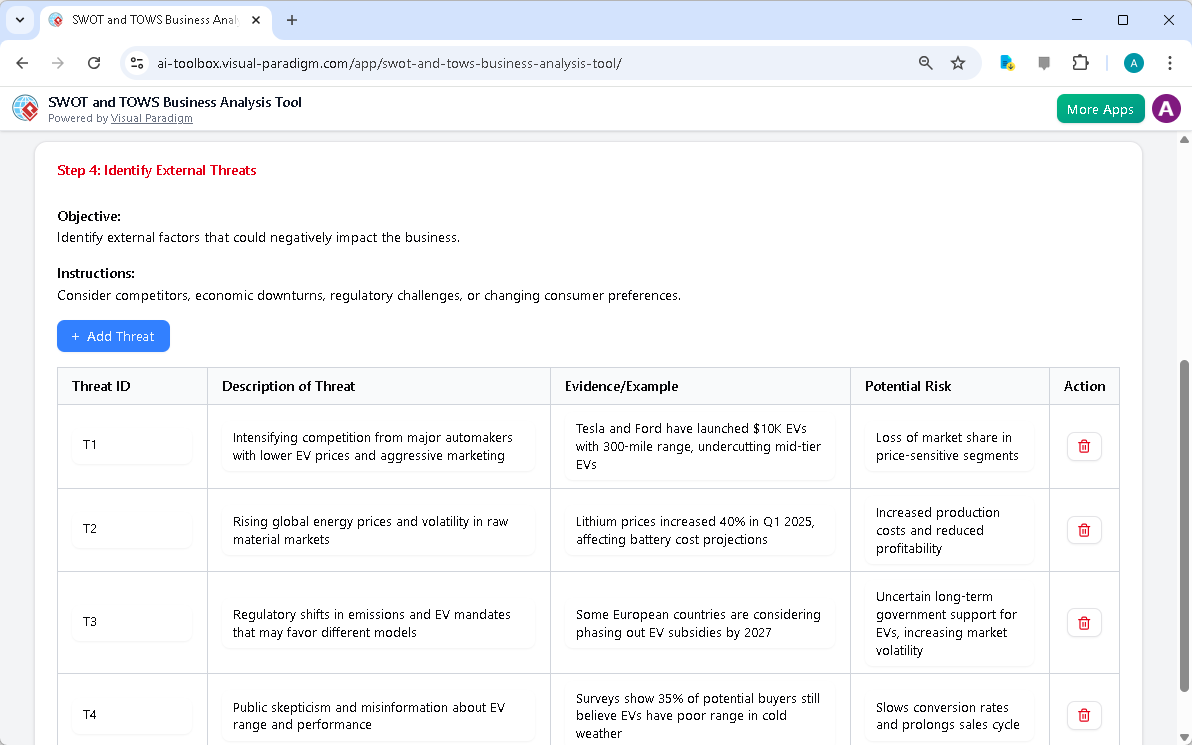
Step 4: Assess External Threats
The professional strategic planning editor acts as an early warning system, highlighting risks such as:
- Intensifying competition from traditional automakers entering EV market
- Regulatory shifts affecting battery sourcing and recycling
- Economic downturns reducing consumer spending on premium vehicles
- Supply chain disruptions affecting semiconductor availability
Understanding these threats enables organizational resilience planning.
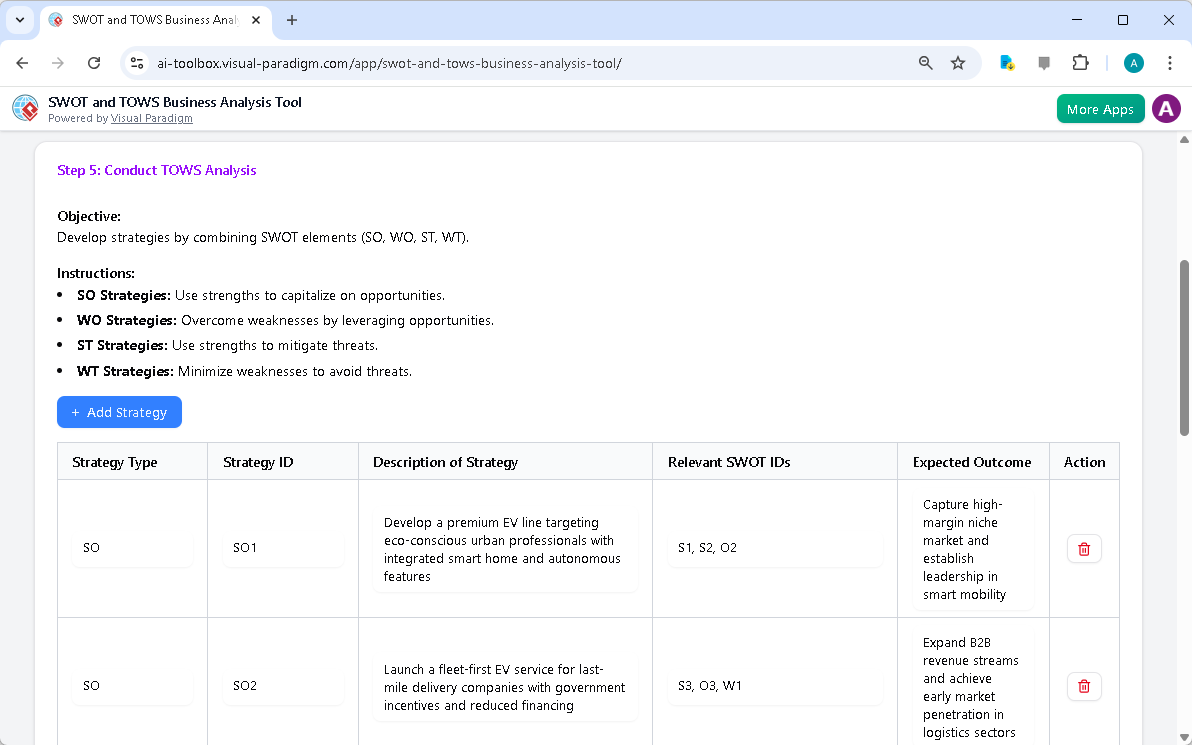
Step 5: Develop TOWS Strategies
This is where analysis becomes action. The tool helps you cross-reference internal and external factors to create strategies like:
- SO Strategy: Leverage advanced battery technology to capture high-margin niche markets in regions with strong EV incentives
- WO Strategy: Partner with charging network providers to address infrastructure gaps while expanding into emerging markets
- ST Strategy: Use strong brand positioning to differentiate from new competitors entering the market
- WT Strategy: Diversify battery supply chain to reduce dependency risks and cost vulnerabilities
This logical progression ensures your strategic plan is a coherent roadmap, not just a list of observations.
Step 6: Generate Final Report
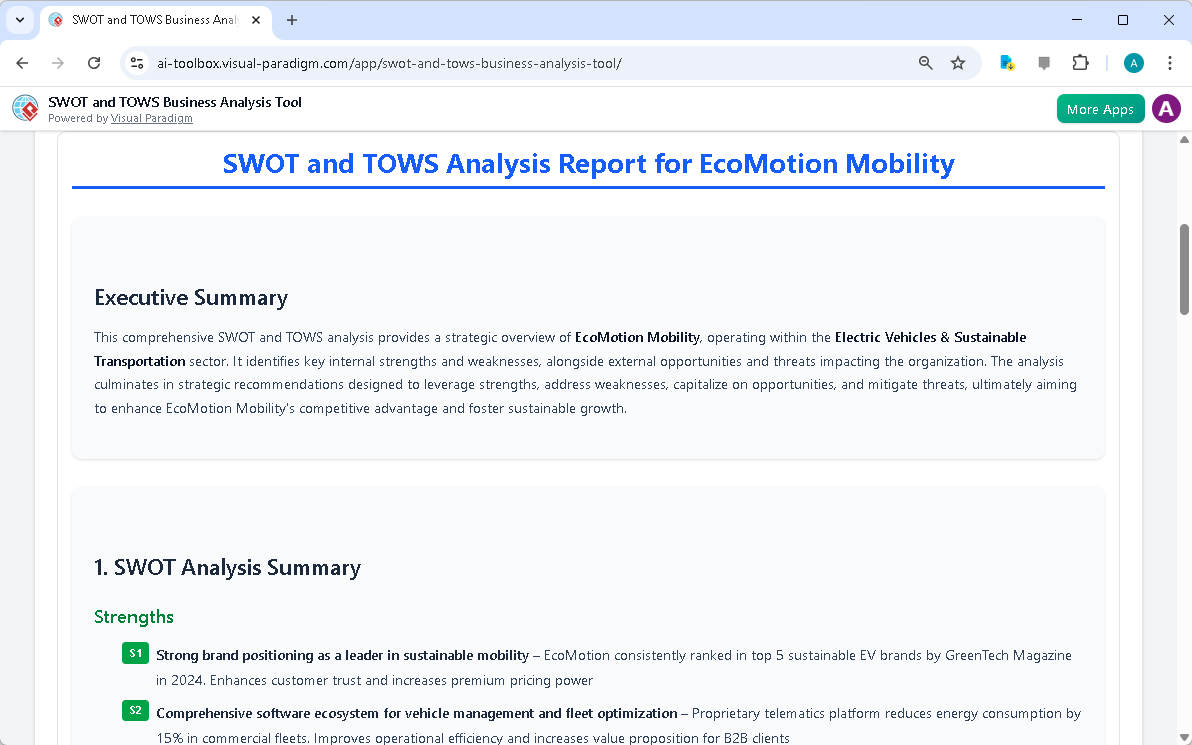
The wizard culminates in a comprehensive report featuring:
- Executive summary for quick stakeholder alignment
- Detailed SWOT breakdown with supporting data
- TOWS matrix with prioritized action items
- Implementation timeline and resource requirements
- Success metrics and monitoring framework
This polished, presentation-ready document would typically take hours to assemble manually, but the AI-powered SWOT and TOWS analysis completes it in minutes.
Best Practices for Maximum Impact
1. Involve Diverse Perspectives
Even the best AI SWOT generator benefits from human input. Gather insights from different departments—sales, operations, finance, and customer service—to ensure comprehensive coverage.
2. Update Regularly
Markets change rapidly. Schedule quarterly reviews using your online SWOT maker to keep insights current and strategies relevant.
3. Focus on Actionability
Don’t just identify factors—prioritize them. Which strengths can you leverage immediately? Which threats require urgent attention?
4. Connect to Metrics
Link each strategic initiative to measurable outcomes. This transforms your SWOT analysis from an academic exercise into a performance management tool.
5. Share Widely
Use the shareable infographic features to ensure everyone in your organization understands the strategic direction. Alignment is half the battle.
Why Choose Visual Paradigm’s AI Visual Modeling Ecosystem
Visual Paradigm stands out as the premier choice because it’s more than just a collection of tools—it’s a comprehensive AI visual modeling ecosystem. Whether you need:
- Rapid infographic generation for quick presentations
- Deep strategic analysis with TOWS matrix development
- Conversational AI assistance for brainstorming sessions
- Professional reporting for executive stakeholders
- Collaborative features for distributed teams
The platform supports dozens of industry standards including UML, ArchiMate, and C4 models, ensuring your technical and business visualizations maintain the highest professional standards.
Getting Started Today
Ready to transform your strategic planning process? Here’s your action plan:
- For quick infographics: Try the Infographic Designer Now and create your first AI-powered SWOT analysis in under 5 minutes.
- For comprehensive analysis: Visit the SWOT and TOWS Business Analysis Tool to develop actionable strategies with guided workflows.
- For conversational assistance: Explore the full power of the AI Chatbot and experience strategic planning as a collaborative dialogue.
The future of strategic planning is here. Don’t let blank canvas syndrome slow you down. Start creating professional, insightful, and beautiful SWOT analyses today.
Related Resources
SWOT analysis is a foundational strategic planning framework used to identify internal strengths and weaknesses alongside external opportunities and threats, often enhanced by AI-driven automation and collaborative digital canvases.
- What is SWOT Analysis? A Complete Guide to Strategic Planning: This foundational guide covers the components, benefits, and applications of the framework in business decision-making.
- A Comprehensive Guide to SWOT Analysis: From Theory to Practice: This resource explores the best practices and practical applications of the analysis across business, education, and project management.
- SWOT Analysis: A Definitive Guide to AI-Powered Strategic Planning: This article explains how artificial intelligence transforms traditional planning into a fast, data-driven process by enabling deeper TOWS strategy development.
- SWOT Analysis Tutorial: Step-by-Step Guide for Beginners: A practical walkthrough designed to help users conduct their first analysis using an intuitive visual interface.
- AI-Powered SWOT and TOWS Business Analysis Tool: This tool leverages AI to bridge the gap between simple lists and dynamic, actionable strategies through the TOWS matrix.
- SWOT Analysis Case Study: Real-World Examples and Insights: This article provides real-world perspectives on applying the framework across various industries to inform strategic shifts.
- The Core Difference: SWOT vs. TOWS: A specialized guide that demonstrates how to transform raw analysis data into actionable execution plans by pairing internal and external factors.
- SWOT Analysis in Visual Paradigm Circle – Collaborative Strategic Planning: This link highlights cloud-based features that allow distributed teams to perform real-time, collaborative strategic assessments.
- Free SWOT Analysis Templates for Instant Strategic Planning: Access a library of professionally designed templates to jumpstart planning sessions without manual design effort.
- Meet the AI SWOT Assistant: How Visual Paradigm’s Chatbot Helps: This guide details how to use natural language prompts to generate accurate strategic diagrams and deeper analytical insights.