In the fast-paced environment of Agile development, the Sprint Review is often mistaken for a simple demonstration of completed features. However, when executed with intention, it serves as a critical feedback loop that aligns product direction with business value. This guide explores how to transform the Sprint Review from a passive showcase into an active collaboration session that stakeholders genuinely appreciate and engage with.
Understanding the Core Purpose of the Sprint Review 🧭
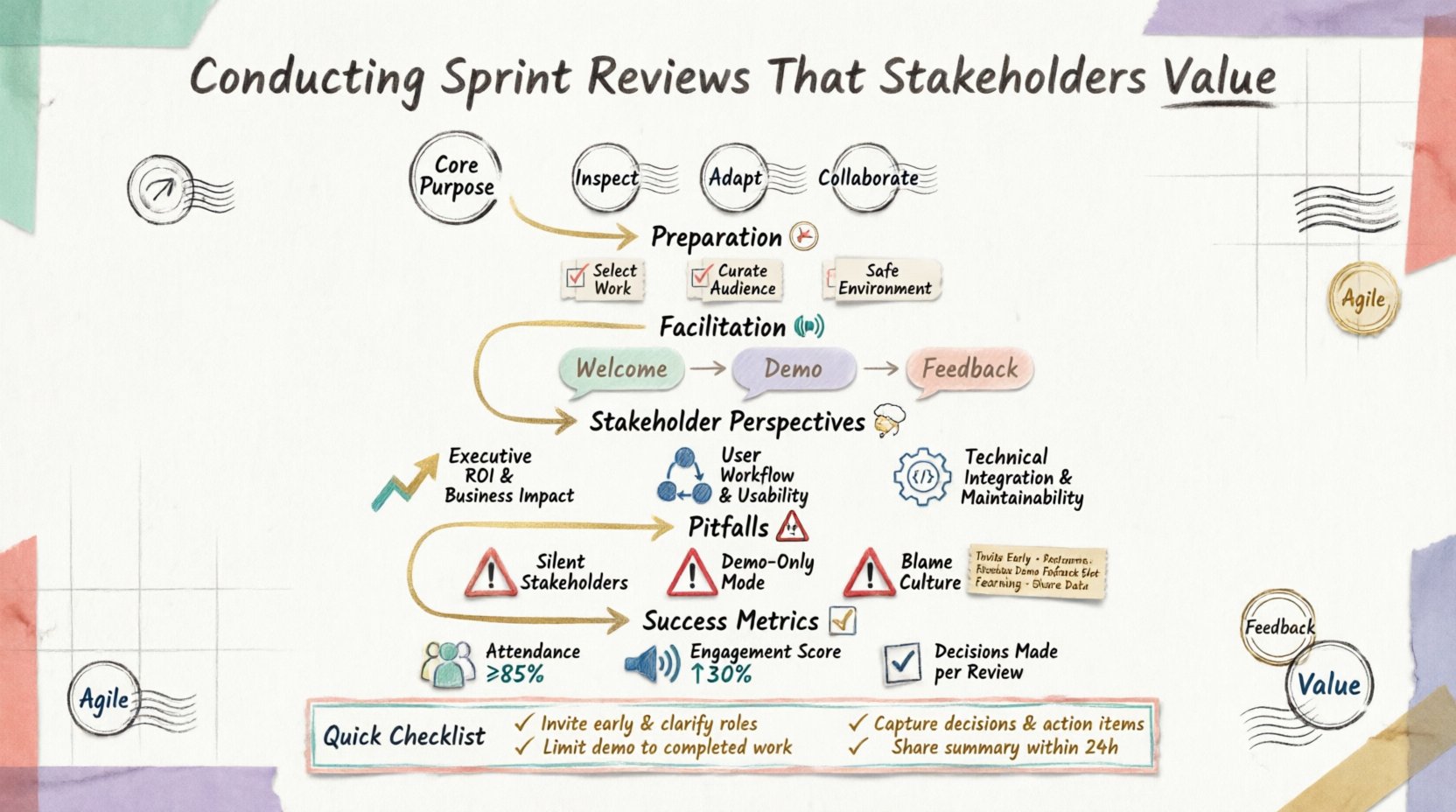
The Sprint Review is an informal meeting, not a formal presentation. Its primary objective is to inspect the Increment and adapt the Product Backlog if needed. It is not about proving work was done; it is about discussing what to do next. Stakeholders attend to see progress, provide feedback, and ensure the product is moving in the right direction.
- Inspect the Increment: Review the work completed during the Sprint.
- Adapt the Backlog: Discuss changes to priorities based on market feedback.
- Collaborate: Engage stakeholders in conversation, not just listening.
Many teams fail here because they treat the Review as a final checkpoint. Instead, view it as a continuous dialogue. The goal is to foster trust and transparency. When stakeholders feel heard and see their input shaping the roadmap, their investment in the product increases.
Preparation: Setting the Stage for Success 📋
Preparation begins days before the event. Rushing to gather work at the last minute leads to a disjointed experience. A well-prepared review allows the team to focus on value and discussion rather than logistics.
1. Selecting the Right Work to Show
Not every item in the Sprint Backlog needs to be demonstrated. Choose items that provide the most value or insight. If an item is not done, be transparent. Do not hide unfinished work; instead, discuss the blockers and the plan to resolve them. Transparency builds more credibility than a polished facade.
- Show end-to-end functionality where possible.
- Include features that solve specific stakeholder problems.
- Highlight technical improvements if they enable future speed.
- Avoid showing incomplete work without context.
2. Curating the Audience
Invite the right people. Too many attendees can dilute the conversation. Too few can miss critical perspectives. Aim for a mix of decision-makers, users, and subject matter experts.
| Role | Contribution | Why They Matter |
|---|---|---|
| Product Owner | Facilitates backlog discussion | Ensures alignment with vision |
| Development Team | Demonstrates work and explains technical context | Provides technical transparency |
| Stakeholders | Provides market feedback and requirements | Validates business value |
3. Creating a Safe Environment
Set the room up (or the virtual space) to encourage interaction. Round tables are better than rows. If virtual, use breakout rooms for specific topics. Ensure everyone knows the agenda. Share the agenda beforehand so attendees can prepare their thoughts.
Facilitation: Guiding the Conversation 🗣️
The facilitator sets the tone. This role often falls to the Scrum Master or Product Owner. The facilitator must keep the meeting focused on value and avoid technical deep dives that alienate non-technical attendees.
1. The Welcome and Context
Start by reminding everyone of the Sprint Goal. This provides a framework for the work shown. If the goal was achieved, celebrate that. If not, discuss the deviation without blame. The focus is on learning and adaptation.
- State the Sprint Goal clearly at the start.
- Recap the purpose of the meeting.
- Set time expectations for each section.
2. The Demonstration
When showing work, focus on the user experience. Walk through the flow as a real user would. Avoid reading code or discussing architecture unless relevant to the user’s problem. Narrate the story behind the feature.
- Use real data, not test data, where possible.
- Explain the “Why” behind the feature.
- Invite immediate reactions, not just at the end.
- Keep the demo interactive if possible.
3. Managing Feedback
Feedback can come in many forms. Some will be enthusiastic, others critical. Treat all feedback as valuable data. Do not get defensive. The team is there to learn, not to defend past decisions.
- Listen actively to every comment.
- Clarify questions before responding.
- Document feedback for later analysis.
- Avoid arguing over technical constraints in the room.
Stakeholder Psychology: Understanding Their Needs 🧠
Stakeholders have different motivations. Some want to see progress for their bosses. Others want to ensure their specific requirements are met. Understanding these drivers helps tailor the review.
1. The Executive Perspective
Executives care about ROI and strategic alignment. They want to know if the product is moving toward business goals. Show high-level progress and how the current work supports the roadmap.
- Highlight key metrics or outcomes.
- Connect features to business objectives.
- Keep the discussion focused on value delivery.
2. The User Perspective
Users care about usability and solving their daily problems. They want to know if the tool makes their job easier. Demonstrate workflows that solve real pain points.
- Show how the feature reduces effort.
- Ask about their current workflow.
- Focus on the user journey.
3. The Technical Perspective
Technical stakeholders care about scalability and maintainability. They want to know if the solution is sustainable. Include a brief section on technical health if it impacts future delivery.
- Mention technical debt if it affects speed.
- Explain architectural decisions simply.
- Highlight performance improvements.
Common Pitfalls and How to Avoid Them 🚧
Even experienced teams stumble during Sprint Reviews. Recognizing these traps helps maintain quality.
1. The Lecture Mode
Problem: The team talks for 45 minutes and asks for feedback in the last 5 minutes.
Solution: Limit the demo time to 30 minutes. Reserve the rest for discussion. Use a timer.
2. The Perfection Trap
Problem: The team only shows work that is 100% complete and bug-free.
Solution: Show work in progress if it provides value. Honesty builds trust. Discuss known issues openly.
3. The Scope Creep Discussion
Problem: Stakeholders start adding new requirements during the review.
Solution: Politely defer new ideas to the backlog grooming session. Acknowledge the idea but note it belongs in the backlog for prioritization.
4. The Silence Zone
Problem: No one asks questions or gives feedback.
Solution: Ask specific questions to break the ice. “What would make this feature more useful for you?” or “How does this fit your current workflow?”
Measuring the Value of the Review 📈
How do you know the Sprint Review was successful? Look for indicators of engagement and decision-making.
- Attendance: Do stakeholders show up consistently?
- Engagement: Are they asking questions and offering feedback?
- Decisions: Does the Product Backlog change based on the review?
- Feedback Loop: Do stakeholders feel their input was acknowledged?
Conduct a retrospective on the Sprint Review itself occasionally. Ask the team and stakeholders what worked and what didn’t. Adjust the format over time.
Post-Review Actions
The meeting ends, but the work continues. Ensure feedback is captured and acted upon.
- Update the Product Backlog with new ideas.
- Adjust priorities based on stakeholder input.
- Share a summary of decisions with absent stakeholders.
- Track action items to closure.
A Checklist for Success
Use this checklist to prepare for your next Sprint Review.
| Item | Status |
|---|---|
| Invite relevant stakeholders | ☐ |
| Prepare demonstration environment | ☐ |
| Define the Sprint Goal | ☐ |
| Set up time limits | ☐ |
| Prepare feedback capture method | ☐ |
| Confirm technical setup | ☐ |
Final Thoughts
The Sprint Review is a cornerstone of Agile transparency. It is where the team meets the business. By treating it as a collaborative workshop rather than a presentation, you create an environment where value is co-created. Stakeholders become partners in the process, and the product evolves based on real-world input. Focus on connection, clarity, and continuous improvement. When the team and stakeholders move forward together, the product succeeds.