

In the world of Agile and Scrum, the primary measure of progress is the delivery of a potentially shippable increment. However, simply shipping code is not enough. The real objective lies in maximizing value delivery every sprint. This guide explores the mechanics, mindset, and practical steps required to ensure that every effort spent by the team translates into tangible benefits for the customer and the business.
Understanding Value in a Scrum Context 💡
Before optimizing the process, we must define what value actually means. Value is not merely the completion of tasks. It is the benefit derived from a feature or product. It answers the question: Does this help the user solve a problem or achieve a goal?
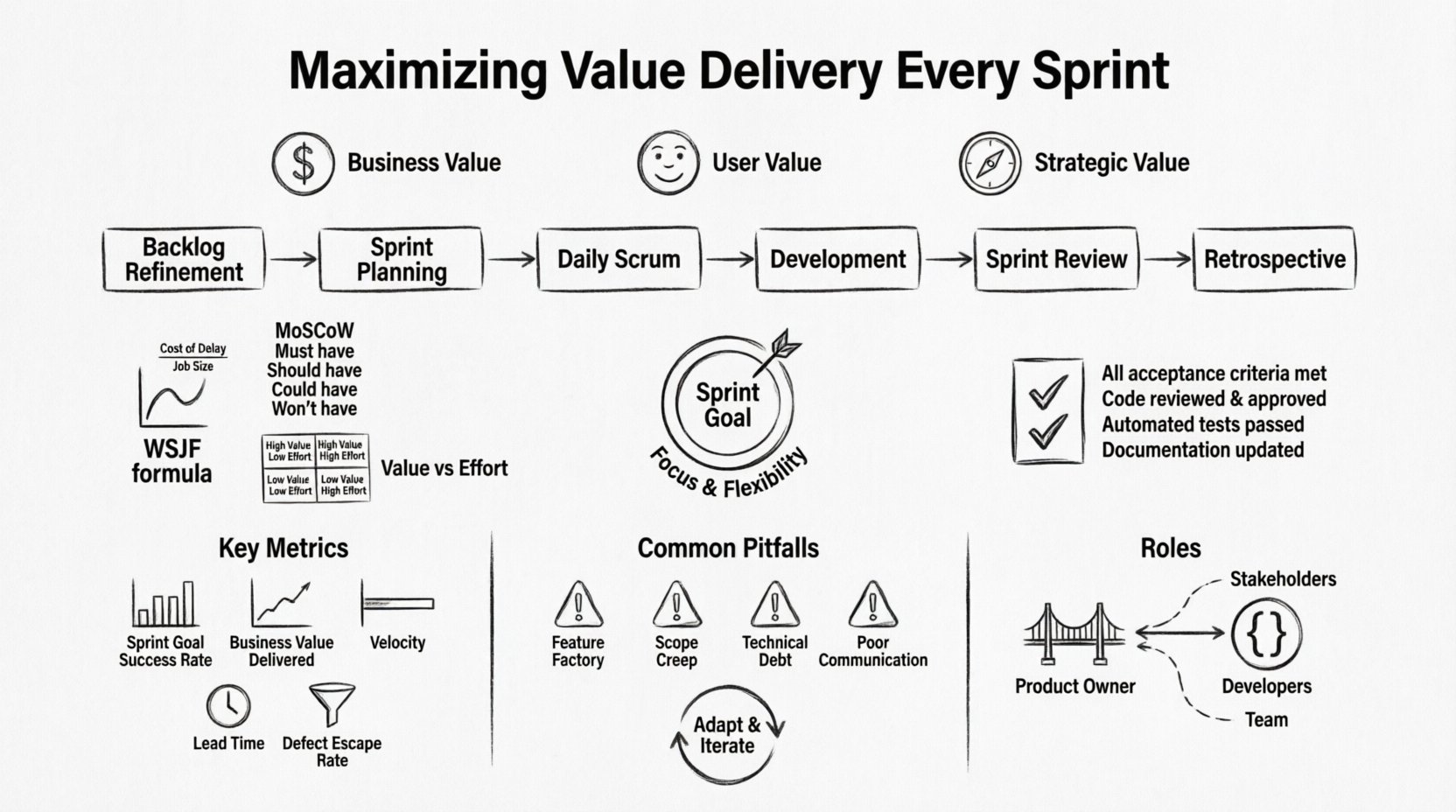
- Business Value: Revenue generation, cost reduction, or market share growth.
- User Value: Improved usability, reduced friction, or enhanced satisfaction.
- Strategic Value: Alignment with long-term organizational goals and vision.
When a team focuses solely on output (lines of code, tickets closed), they risk building the wrong things efficiently. Focusing on value requires a shift in perspective. The Product Owner plays a critical role here, acting as the bridge between stakeholder needs and team execution.
Foundations of Value-Driven Planning 📋
Value delivery begins before the first line of code is written. It starts with how the backlog is managed and prioritized. A well-maintained backlog ensures the team always works on the highest priority items.
1. Backlog Refinement Techniques
Refinement, often called grooming, is the process of adding detail, estimates, and order to the Product Backlog. To maximize value, this session must be rigorous.
- Clear Definitions: Every item must have a clear understanding of what it is and why it matters.
- Estimation: Relative sizing helps the team understand effort, allowing for better capacity planning.
- Dependency Mapping: Identify external constraints that might block value delivery.
- Splitting Stories: Large items should be broken down into smaller, testable increments to reduce risk.
2. Prioritization Frameworks
Not all items are created equal. Use frameworks to decide what comes first.
- WSJF (Weighted Shortest Job First): Calculates value based on cost of delay, job size, and risk reduction.
- MoSCoW Method: Categorizes items as Must have, Should have, Could have, or Won’t have.
- Value vs. Effort Matrix: Plot items on a grid to quickly identify high-value, low-effort wins.
Sprint Planning for Value 🎯
The Sprint Planning event is where the team commits to a set of work. To ensure value delivery, the focus must remain on the Sprint Goal, not just the task list.
Defining the Sprint Goal
The Sprint Goal provides flexibility. If a specific user story cannot be completed, the team can substitute another item that still contributes to the same goal. This agility is key to value delivery.
- Collaborative Setting: The Product Owner proposes the goal, but the Developers refine it to ensure feasibility.
- Alignment: Ensure the goal aligns with the Product Goal and broader organizational strategy.
- Focus: A clear goal prevents scope creep and keeps the team aligned on the primary objective.
Selecting Work from the Backlog
During planning, the team pulls items from the top of the backlog. However, selection should not be blind.
- Capacity Check: Account for holidays, support work, and known interruptions.
- Risk Assessment: Consider technical risks. High-risk items might need spikes to validate value before full commitment.
- Flow Efficiency: Avoid overloading the team. A steady flow of completed work is better than a burst of unfinished work.
Execution and Transparency 🛠️
Once the sprint begins, the focus shifts to execution. Value is created during this phase, but it can be lost if progress is hidden.
The Daily Scrum
This 15-minute event is for inspection and adaptation. It should not be a status report for management. Instead, it is for the Developers to synchronize.
- Focus on the Goal: Discuss progress toward the Sprint Goal, not just individual tasks.
- Impediment Removal: Identify blockers immediately so they do not stall value delivery.
- Adjustment: If the plan is off, adjust the daily plan to get back on track.
Maintaining the Definition of Done
A common pitfall is completing work that is not actually “done.” The Definition of Done (DoD) ensures quality. If an item is not done, it cannot be released, and therefore delivers no value.
- Quality Standards: Include testing, documentation, and code review in the DoD.
- Consistency: Apply the DoD to every single item, regardless of size.
- Transparency: The DoD must be visible and agreed upon by the entire Scrum Team.
Inspecting the Increment 📊
The Sprint Review is the opportunity to inspect the outcome of the sprint and determine future adaptations. This is where value is validated.
Stakeholder Engagement
Invite stakeholders who can provide feedback. Their input is crucial for determining if the delivered increment meets their needs.
- Live Demonstration: Show the product in action, not just slides or reports.
- Open Dialogue: Encourage questions and honest feedback about the direction of the product.
- Revised Backlog: Update the Product Backlog based on feedback received during the review.
Measuring Success
How do we know we are maximizing value? Use a combination of leading and lagging indicators. The table below outlines key metrics to track.
| Metric | Purpose | Target |
|---|---|---|
| Sprint Goal Success Rate | Measures how often the team meets its primary objective. | High (e.g., 80%+) |
| Business Value Delivered | Quantifiable benefit (e.g., user signups, revenue). | Increasing Trend |
| Velocity | Tracks average work completed to forecast capacity. | Stable |
| Lead Time | Time from request to deployment. | Decreasing |
| Defect Escape Rate | Bugs found in production vs. during development. | Low |
Common Pitfalls to Avoid 🚫
Even experienced teams face challenges. Recognizing these patterns early can save significant effort.
- Feature Factory Syndrome: Focusing on quantity of features rather than their impact. Just because a feature is built does not mean it adds value.
- Scope Creep: Adding new items mid-sprint without removing existing ones. This dilutes focus and risks the Sprint Goal.
- Ignoring Technical Debt: Accumulating debt slows down future value delivery. Allocate capacity for refactoring.
- Poor Stakeholder Communication: If stakeholders do not understand the progress, they may assume value is not being delivered.
Continuous Improvement for Value 🔄
The Sprint Retrospective is the dedicated time to improve the process. A better process often leads to better value delivery.
Analyzing the Process
Look at the workflow. Where are the bottlenecks? Where is the waste?
- Workflow Analysis: Track how items move through the system. Identify stages where work piles up.
- Meeting Efficiency: Are meetings adding value? If not, shorten them or cancel them.
- Tooling: Are the tools helping or hindering? Simplify the stack if it adds friction.
Actionable Improvements
Identify one or two improvements to implement in the next sprint. Do not try to fix everything at once.
- Specific Actions: Define who will do what and by when.
- Experimentation: Treat changes as experiments. Try a new approach and measure the result.
- Review Results: Check if the improvement actually helped in the subsequent sprint.
Role of the Product Owner in Value 🏛️
The Product Owner is the guardian of value. Their decisions directly impact the outcome of the sprint.
- Stakeholder Management: They must balance competing interests to find the best path forward.
- Backlog Ownership: They are responsible for the content, availability, and ordering of the backlog.
- Decision Making: They must make timely decisions to prevent the team from stalling.
- Vision Communication: They must ensure the team understands the “why” behind the work.
The Role of Developers in Value 👨💻
Developers create the increment. Their commitment to quality and collaboration is essential.
- Technical Excellence: Writing clean, maintainable code ensures long-term value.
- Collaboration: Pair programming or mob programming can reduce errors and share knowledge.
- Self-Management: The team decides how to turn the Sprint Goal into a Done increment.
- Quality Advocacy: Developers must push back on work that compromises the Definition of Done.
Adapting to Change 🌍
Market conditions change. User needs evolve. A rigid plan will fail to deliver value in a dynamic environment.
- Embrace Uncertainty: Accept that the plan will change. Adaptation is a strength, not a weakness.
- Short Feedback Loops: Release small increments frequently to get feedback sooner.
- Review Assumptions: Regularly check if the assumptions made at the start of the sprint are still valid.
Final Thoughts on Consistency ✅
Maximizing value delivery is not a one-time event. It is a continuous discipline that requires focus, discipline, and open communication. By prioritizing the right work, maintaining high quality standards, and engaging stakeholders effectively, a Scrum Team can consistently deliver value.
Remember that the goal is not just to finish work, but to finish the right work. When the team aligns on this principle, the result is a sustainable pace of innovation and satisfaction for all involved.
Start by auditing your current sprint practices. Identify one area where value is being lost. Apply the strategies outlined here, measure the impact, and iterate. Over time, these small adjustments compound into significant improvements in performance and outcome.