


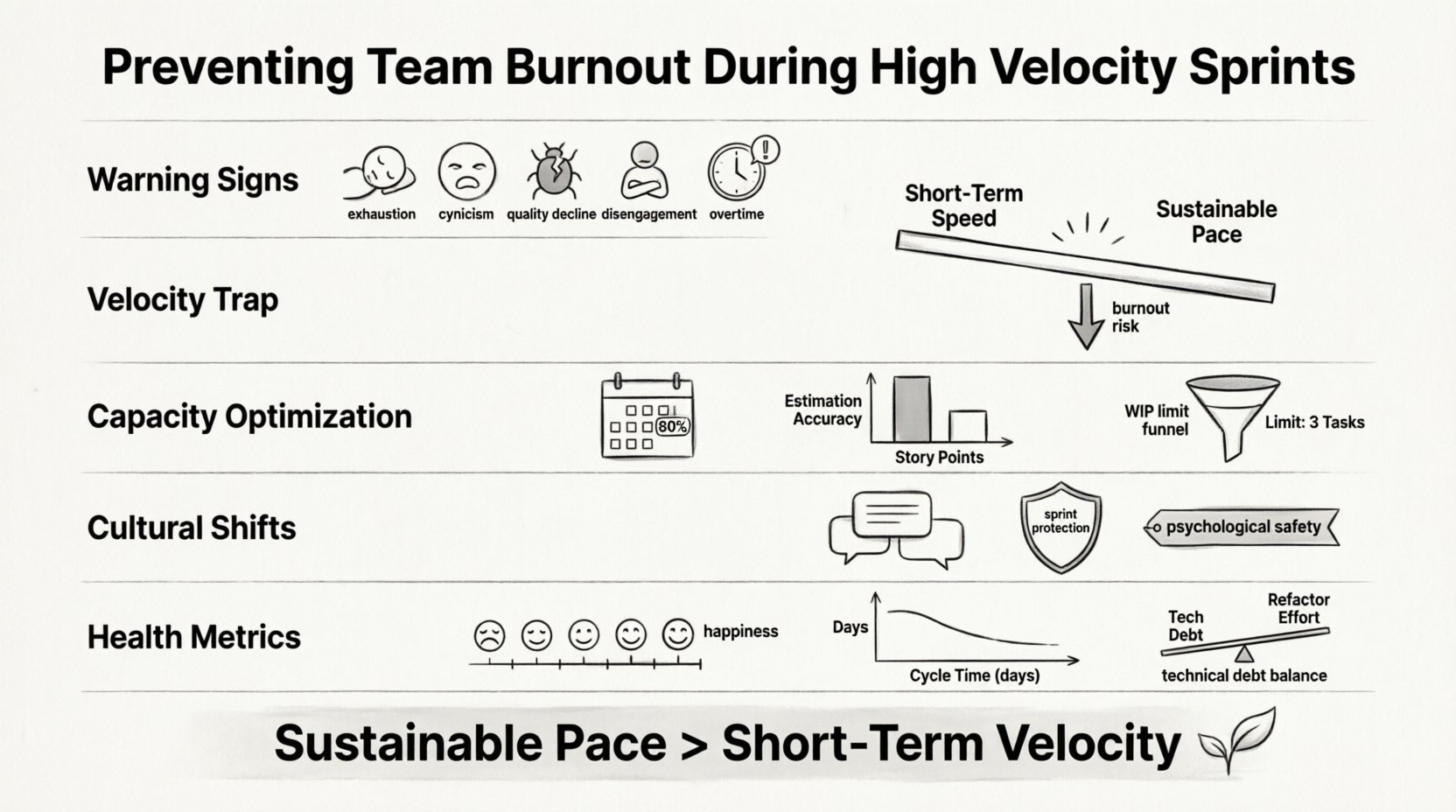
In the world of Agile development and Scrum, velocity is often treated as a key performance indicator. It measures the amount of work a team completes during a sprint. However, when velocity increases rapidly without corresponding adjustments in well-being and capacity, it becomes a precursor to burnout. This guide explores how to maintain high performance without sacrificing the health of your team. We will examine the mechanics of sprint planning, the psychological impact of constant pressure, and practical strategies to ensure sustainability.
High velocity sprints can feel like a victory in the short term. The product moves forward, stakeholders are happy, and momentum is palpable. Yet, this momentum often comes at a cost. Chronic stress, fatigue, and disengagement are the silent outcomes of pushing too hard for too long. The goal is not to slow down, but to optimize for longevity. By understanding the warning signs and implementing structural changes, teams can thrive without collapsing under their own weight.
Recognizing the Warning Signs 🚩
Burnout does not happen overnight. It is a gradual process that manifests through physical, emotional, and behavioral changes. Scrum Masters and Product Owners must be vigilant. Ignoring these signals leads to turnover and reduced quality. Here are the critical indicators to watch for:
- Physical Exhaustion: Team members consistently report fatigue, sleep issues, or frequent illness. This is a direct result of sustained cortisol levels.
- Cynicism and Detachment: A shift in attitude where work feels meaningless. Meetings are skipped, or attendance is purely passive.
- Decreased Quality: Bugs increase, technical debt accumulates, and code reviews become rushed. The focus shifts from correctness to completion.
- Reduced Engagement: Silence during retrospectives or planning sessions. Ideas are not shared, and collaboration stalls.
- Extended Hours: Working beyond the agreed sprint hours becomes the norm rather than the exception. This creates an expectation of constant availability.
When these signs appear, the sprint structure itself is often the culprit. It is not a failure of individual effort, but a failure of system design. Addressing the symptoms without fixing the root cause will only lead to temporary relief.
The Velocity Trap: Why Speed Fails 📉
Velocity is a planning tool, not a productivity metric. When treated as a target, it creates perverse incentives. Teams may inflate estimates to hit numbers, or they may cut corners to ensure stories are marked complete. This is the “velocity trap.” It prioritizes the appearance of progress over actual value delivery.
In a high-velocity environment, the pressure to maintain or exceed previous numbers can become overwhelming. This pressure often stems from external stakeholders who view velocity as a direct correlation to revenue or speed-to-market. However, sustainable pace is the core tenet of the Agile Manifesto. Ignoring this tenet for short-term gains leads to long-term stagnation.
Consider the following comparison of outcomes based on sprint management styles:
| Focus Area | Short-Term High Velocity | Sustainable Pace |
|---|---|---|
| Team Morale | Peaks early, crashes quickly | Stable and resilient |
| Quality of Output | Variable, higher defect rate | Consistent and robust |
| Retention | High turnover risk | Stable workforce |
| Innovation | Low (focus on survival) | High (focus on improvement) |
The data suggests that sustainable practices yield better results over time. The goal is to build a machine that runs for years, not a sprint that burns out in weeks.
Optimizing Sprint Capacity 🗓️
One of the most effective ways to prevent burnout is to align work with reality. Capacity planning is the process of determining how much work a team can realistically complete. It differs from velocity, which is historical data. Capacity accounts for availability, holidays, and known interruptions.
1. Account for Realistic Availability
Do not plan for 100% availability. Every team member needs time for context switching, meetings, and administrative tasks. A standard practice is to plan for 80% of total hours. This buffer absorbs the unexpected and reduces the stress of missing deadlines.
- Meetings: Include time for daily stand-ups, reviews, and retrospectives.
- Context Switching: Developers lose focus when interrupted. Factor in recovery time.
- Personal Time: Acknowledge that people have lives outside of work. Avoid scheduling work during times that encroach on personal boundaries.
2. Refine Story Estimates
If stories are consistently underestimated, the team will feel pressure to rush. Use historical data to adjust estimates. If a team consistently completes 20 story points, but commits to 30, they are setting themselves up for failure. Commit to what you know you can do, not what you hope to do.
3. Limit Work in Progress
Swapping context is expensive. When multiple tasks are started simultaneously, cognitive load increases. Limit the number of items in the “In Progress” column. This forces the team to finish one item before starting another, reducing fragmentation and mental fatigue.
Cultural Shifts and Communication 💬
Process changes are not enough. The culture of the team must support well-being. Psychological safety is the foundation of this culture. Team members must feel safe admitting when they are overwhelmed without fear of retribution or judgment.
1. Normalize Saying “No”
In high-pressure environments, saying “no” feels like failure. It must be reframed as a protective mechanism. If a Product Owner adds a story mid-sprint, the team must have the autonomy to say, “If we add this, we must remove another.” This maintains the commitment boundary.
2. Transparent Communication
Risks should be communicated early. Hiding stress until it becomes a crisis is common but damaging. Regular check-ins should focus on workload balance, not just task completion. Ask questions like:
- Are you feeling overwhelmed by the current scope?
- Is the pace sustainable for the next three sprints?
- Do you have the resources needed to finish your tasks?
3. Protect the Sprint
The Sprint Goal is a contract. External stakeholders should not be allowed to disrupt the flow of work during the sprint. The Scrum Master acts as a shield, deflecting interruptions and unauthorized changes. This protection allows the team to focus deeply on the work at hand.
Metrics Beyond Speed 📊
If you only measure velocity, you get velocity. To prevent burnout, you must introduce metrics that reflect health and sustainability. These metrics provide a holistic view of the team’s state.
1. The Happiness Metric
At the end of every sprint, ask the team to rate their satisfaction on a scale of one to ten. This simple data point can reveal trends that velocity cannot. A drop in happiness often precedes a drop in productivity. Address the sentiment immediately.
2. Cycle Time and Lead Time
These metrics measure how long work takes from start to finish. If cycle time increases while velocity stays the same, it indicates friction. This friction often comes from burnout or bottlenecks. Reducing cycle time can improve flow without increasing pressure.
3. Technical Debt Ratio
High velocity often leads to high technical debt. If code quality degrades, the team spends more time fixing issues later. Track the ratio of new features to bug fixes. If bug fixes exceed new features, the team is burning out on maintenance.
Actionable Checklist for Leadership ✅
Implementation requires action. Use this checklist to audit your current sprint practices and identify areas for improvement.
- Review Capacity: Ensure capacity planning includes non-development time.
- Check Retrospectives: Are they safe spaces? Are action items being followed up?
- Analyze Velocity Trends: Is velocity volatile? Volatility often indicates instability.
- Monitor Workload: Are some team members carrying more load than others?
- Enforce Boundaries: Are meetings scheduled during core hours? Is overtime discouraged?
- Encourage Breaks: Promote taking breaks during the day. Continuous work reduces cognitive function.
- Validate Stories: Ensure stories are small enough to be completed within the sprint.
- Respect Definition of Done: Do not skip testing or documentation to save time.
Long-Term Sustainability Strategies 🌱
Burnout prevention is an ongoing process. It requires constant attention and adjustment. Here are strategies to maintain health over the long term.
Rotate Responsibilities: Avoid letting one person become the bottleneck. Rotate the role of Scrum Master or facilitate different types of meetings among team members. This distributes the cognitive load.
Invest in Training: Allow time for learning. When teams are forced to work only on production tasks, skills stagnate. Downtime for training leads to better efficiency later.
Focus on Outcomes: Shift the conversation from “how many stories” to “what value was delivered.” Value is not always linear. Sometimes a small change delivers massive value. Recognize this distinction to reduce pressure on quantity.
Encourage Autonomy: Micromanagement is a major driver of burnout. Give teams ownership of how they solve problems. Autonomy increases engagement and reduces stress.
Conclusion
High velocity is attractive, but it is not a sustainable strategy for building software. The health of the team is the most critical asset in any development organization. By focusing on capacity, culture, and health metrics, organizations can achieve consistent delivery without the cost of exhaustion. The goal is to build a system that supports the people within it. When people are well, the work gets done better. Prioritize sustainability, and the results will follow naturally.